

Recurring Events, Guests, and Reminders
This guide covers the three things that turn a calendar entry into a working meeting: making it repeat on the right schedule, inviting the right people and tracking who is coming, and being reminded before it starts. After this page you will build a recurring series with confidence, know exactly what a later edit will change, and set reminders that reach you on time.
Building a Recurring Series
After this section you will create a repeating event on any schedule. In the event editor, open the Repeat field. The presets cover the common cases directly:
- Does not repeat (a one-time event).
- Daily, Weekly, Monthly, and Annually.
- Every weekday (Monday through Friday).
- Custom, which opens a builder.
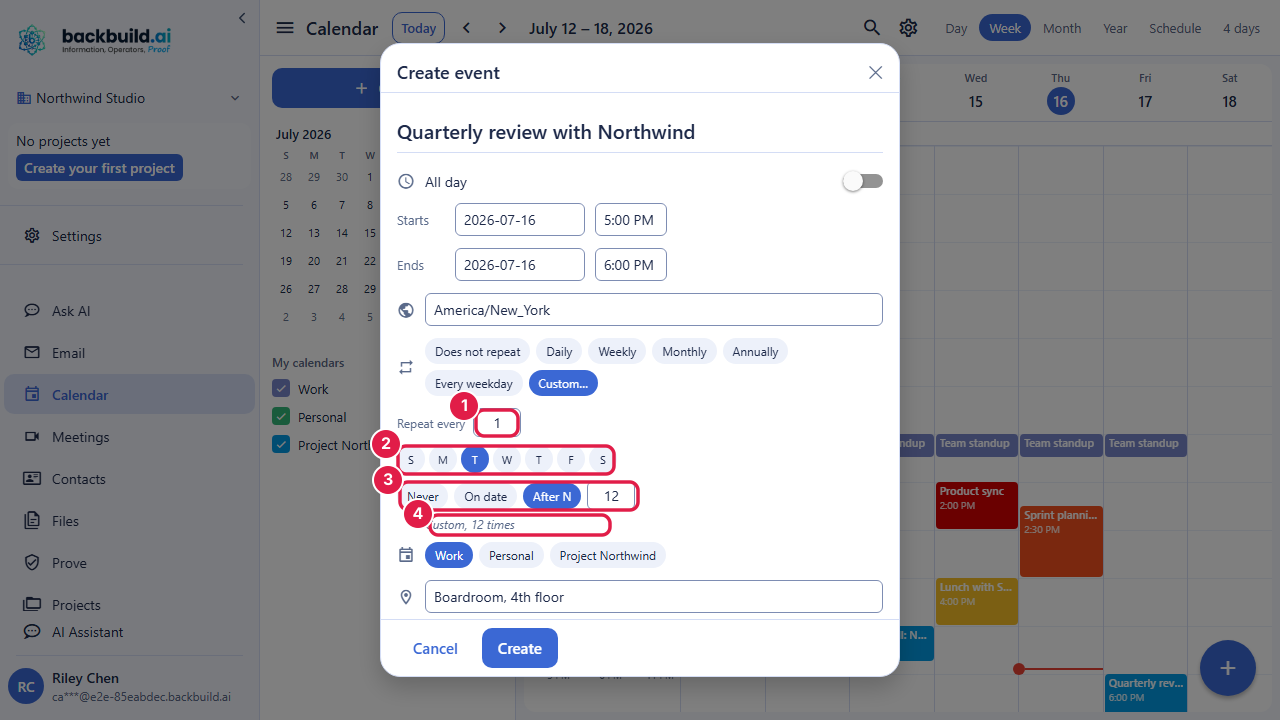
The Custom builder lets you set the interval (for example, every 2 weeks), choose the weekdays a weekly series lands on with a row of day chips, and set when the series ends: never, on a specific date, or after a number of occurrences. As you build the pattern, a plain-language summary reads it back to you (for example, "Every 2 weeks on Tuesday and Thursday, 10 times"), so you can confirm the rule before you save.
Editing One Event or the Whole Series
After this section you will never change more (or less) than you meant to. When you save a change to, or delete, an event that is part of a recurring series, Backbuild Calendar asks the question every calendar user knows, and applies your change to exactly the scope you pick:
- This event: only the one occurrence you opened. Use this to move a single standup to a different hour without touching the rest.
- This and following events: this occurrence and every later one, leaving past occurrences as they were. Use this when a meeting moves permanently starting next week.
- All events: the entire series, past and future. Use this to rename a recurring meeting or change its length everywhere.
Because a single occurrence can be changed on its own, a series can carry exceptions (a holiday skip, a one-week time change) without breaking the underlying rule.
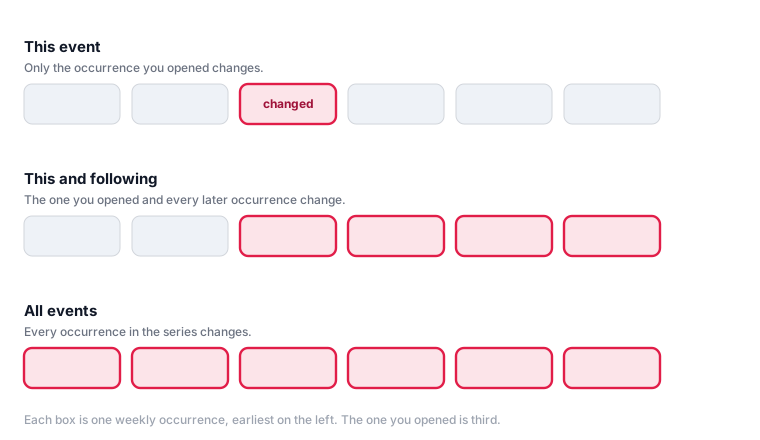
When I edit a recurring meeting, does it change just this one or the whole series? You choose every time. Saving or deleting an occurrence prompts This event, This and following events, or All events, so the same meeting can be nudged once or rescheduled forever with the same few clicks.
Inviting Guests and Tracking Replies
After this section you will invite people and know who is coming. In the Guests field, add attendees by email, separated by commas or spaces. When you save, each invited guest receives a standards-based email invitation with a calendar attachment, so the event lands correctly in whatever calendar they use, Backbuild or otherwise.
Guests reply Yes, Maybe, or No, and their response shows next to their name on the event detail card. As the organizer you read the running tally on the event itself, so you can see at a glance who has accepted without trading confirmation emails. The people you invite are the same records you keep in Backbuild Contacts, so a guest is usually someone you already have on file.
Do guests get a real invite, and where do I see their RSVP? Every invited guest gets an email invitation they can accept from their own calendar, and their Yes, Maybe, or No appears next to their name on the event. You never have to ask "are you coming"; the answer is on the event.
Reminders That Reach You
After this section you will set reminders that fire before an event starts. On the event editor, choose a reminder: 5, 10, 15, 30, or 60 minutes, or 1 day before, or none. A reminder fires as a notification ahead of the event so a meeting does not slip past you.
My reminders are not showing up. What should I check? First confirm the event has a reminder set (open it and check the reminder field, since an event with no reminder will not notify you). If reminders are set but you still miss them, the cause is almost always outside the calendar: check that your browser or desktop app is allowed to show notifications, and that your operating system's Do Not Disturb or focus mode is not suppressing them. Backbuild Calendar sends the reminder; your device has to be permitted to show it.
Recurring Events Across Time Zones
A recurring event is anchored to a time zone, so it stays locked to that local time for its owner even across a daylight saving change. Attendees in other zones see it shift by an hour when their zone and the anchor zone cross a daylight saving boundary at different dates, which is expected behavior, not a bug. When a recurring meeting spans zones, state the anchor zone so everyone reads it the same way. The mechanics of per-event zones and multi-zone display are in Settings and Time Zones.