

Microsoft 365 alternative: the full Backbuild workspace vs Microsoft 365
Microsoft 365 is a whole office suite of Word, Excel, PowerPoint, Outlook, Teams, OneDrive, and SharePoint; the Backbuild side does that job with Mail at your own domain, Calendar, Docs, Sheets, Slides, Photos, Files, and Contacts, and adds surfaces Microsoft 365 has no in-suite equivalent for: a relational data platform, double-entry accounting, a zero-knowledge Secrets vault, Remote Desktop and cloud desktops, Virtual Workers, and a help desk, with single sign-on and a tamper-evident audit log on every plan. Microsoft 365 still leads today on the depth of Excel, its installed desktop Office apps, Microsoft Teams, and the Microsoft Entra and Purview enterprise estate.
The short answer
Microsoft 365 is a whole office suite of Word, Excel, PowerPoint, Outlook, Teams, OneDrive, and SharePoint, with the Microsoft Entra identity and Microsoft Purview compliance surround; on the Backbuild side that job is done by Mail at your own domain, Calendar, Contacts, Docs, Sheets, Slides, Photos, and Files together, plus surfaces Microsoft 365 has no in-suite equivalent for. Choose Backbuild if you want that suite plus a relational data platform, double-entry accounting, a zero-knowledge Secrets vault, Remote Desktop, and Virtual Workers in one subscription, with single sign-on, SCIM, and audit logging on every plan including Free, a full-platform REST API with no monthly call quota, and a workspace that is free for up to 50 seats. Choose Microsoft 365 if the deciding factors are the depth of Excel with pivot tables and Power Query, the installed desktop Office apps and mature offline editing, Microsoft Teams for meetings and chat, which are shipped and ubiquitous where Backbuild Meetings and Chat are on the roadmap, or the Microsoft Entra and Purview enterprise estate.
Backbuild vs Microsoft 365: feature by feature
Prices and limits below are quoted from each vendor’s own pages, observed 2026-07-18. The highlighted column is Backbuild. In the workspace apps group, each row is one app in the Backbuild subscription; where Microsoft 365 has a similar app, the row note names it and the indented rows beneath list the features that differ, in both directions.
| Backbuild The everyday workspace plus a data platform, accounting, and a vault Workspace free up to 50 seats, including the everyday apps, the data platform, accounting, and the Secrets vault, with single sign-on, SCIM, and audit logging on every plan. Paid plans $19 to $149 per seat; Pro adds the SaaS Builder. Get Started Free | Microsoft 365 Word, Excel, PowerPoint, Outlook, Teams, OneDrive, and SharePoint No free tier; one-month trial, annual commitment. Business Basic $7 (web and mobile only), Business Standard $14, Business Premium $22 per user. Copilot is a further $18 to $21. Business plans cap at 300 users. | |
|---|---|---|
| Price and limits | ||
| Free plan | Up to 50 seats | No free tier; one-month trial |
| Entry price per user | $0 on Free; $19 to $149 by plan | $7 Basic, $14 Standard, $22 Premium |
| Installed desktop office apps at entry price | Desktop app on Free | Basic is web and mobile only |
| Seat cap per tenant | No packaged seat cap | 300 users on business plans |
| Bulk file storage economics | 1 GB Free, then credit-metered | 1 TB per user pooled |
| AI included without an add-on fee | Assistant on every plan, usage credits | Copilot add-on $18 to $21 per user |
| Workspace apps in the same subscription | ||
| Backbuild Mail (Microsoft 365’s similar app: Outlook and Exchange Online) | Outlook and Exchange | |
| Email at your own domain | ||
| Free custom domains with guided DNS setup | Domain billed per user | |
| Shared team mailboxes with read and write grants | Shared and delegated mailboxes | |
| Installed Outlook desktop client with mature offline | Web and desktop app | Installed Outlook, deep offline |
| Spam maturity and deliverability track record | Newer sending reputation | Mature filtering at scale |
| Backbuild Calendar (Microsoft 365’s similar app: the Outlook calendar) | Outlook calendar | |
| Two-way sync with Google, Microsoft 365, and CalDAV | Exchange and imported calendars | |
| Appointment booking pages | On the roadmap | Microsoft Bookings |
| Backbuild Docs (Microsoft 365’s similar app: Word) | Word | |
| WYSIWYG with a raw LaTeX source mode and live math | Equation editor | |
| Export to LaTeX, DOCX, ODT, HTML, Markdown, RTF, and EPUB | DOCX, ODT, PDF, HTML | |
| Machine-checked proof blocks with a higher-order-logic kernel | With Backbuild Science or Prove | |
| Installed Word desktop app with macros and VBA depth | Web and desktop app | Installed Word, VBA macros |
| Backbuild Sheets (Microsoft 365’s similar app: Excel) | Excel | |
| Function library | More than 500 functions | Full function library |
| Pivot tables, Power Query, and Power Pivot depth | Not matched today | Pivot tables, Power Query, Power Pivot |
| Charts, sorting, filtering, and validation | ||
| Structured data on a real relational database | Entity types, free plan | Dataverse, a separate license |
| SQLite export of a workbook | SQLite export on paid plans | |
| Installed Excel desktop app with VBA macros and add-ins | Web and desktop app | Installed Excel, VBA, add-ins |
| Backbuild Slides (Microsoft 365’s similar app: PowerPoint) | PowerPoint | |
| Native LaTeX decks on the document editor | ||
| PowerPoint and OpenDocument export | PPTX and ODP | |
| Installed PowerPoint desktop app and Designer AI | Web and desktop app | Installed PowerPoint, Designer |
| Backbuild Files (Microsoft 365’s similar apps: OneDrive and SharePoint) | OneDrive and SharePoint | |
| Folders, sharing scopes, and per-audience libraries | SharePoint sites and link scopes | |
| Pooled bulk storage economics | Credit-metered beyond the allowance | 1 TB per user pooled |
| Native Microsoft Office file interoperability | Import and export of Office formats | Native Office file formats |
| Backbuild Photos (Microsoft 365 has no photo-management app in the business suite) | ||
| Non-destructive layer editor and RAW develop | ||
| Backbuild Contacts (Microsoft 365’s similar app: Outlook contacts) | Outlook contacts | |
| Meetings (Microsoft 365’s app: Microsoft Teams, shipped and ubiquitous) Soon | On the roadmap | Microsoft Teams |
| Chat (Microsoft 365’s app: Microsoft Teams chat, shipped) Soon | On the roadmap | Microsoft Teams chat |
| Diagrams (Microsoft 365’s answer: Visio, a separate subscription) Soon | On the roadmap | Visio, a separate subscription |
| Surfaces Microsoft 365 does not have in-suite | ||
| Relational data platform (entity types, typed relationships, views, automations; Microsoft’s answer is Power Apps and Dataverse, a separate paid layer) | Power Apps and Dataverse | |
| Double-entry accounting (general ledger, invoicing, bills, bank reconciliation, reports) | ||
| Zero-knowledge, post-quantum Secrets vault | ||
| Remote Desktop to your own machines and cloud desktops (Microsoft’s answer is Windows 365, a separate subscription) | Windows 365, a separate subscription | |
| Virtual Workers (an AI worker operating a real container, desktop, browser, and terminal) | ||
| Backbuild Studio (screen-driven training videos narrated from a script; Microsoft’s adjacent tool is Clipchamp) | Clipchamp (basic video) | |
| Training course system (build and publish courses, quizzes, and certificates; Microsoft’s answer is Viva Learning) | Viva Learning (add-on) | |
| Help desk (tickets, workflow states, assignment, and replies) | 20 tickets/mo Free; unlimited paid | |
| Package and sell an app (the SaaS Builder, a paid add-on on Backbuild Pro) | SaaS Builder (Pro) | Power Apps (separate) |
| AI and agents | ||
| Built-in AI assistant grounded in your data | Copilot | |
| Bring your own AI providers and models | Bundled Copilot model | |
| AI included without a per-user add-on fee | Assistant on every plan, usage credits | Copilot add-on $18 to $21 per user |
| The whole platform exposed to AI agents over MCP | Native, whole platform | Via the Graph API and Copilot |
| AI builds the data model, documents, and automations end to end | Copilot assists in each app | |
| AI worker operating a real computer (a full desktop, browser, and terminal) | Virtual Workers, on usage credits | |
| Author AI skills as governed state machines | ||
| API, automation, and integrations | ||
| One public REST API across the whole platform | Microsoft Graph, per-workload | |
| Data-model REST endpoints | 72 endpoints for entities and views | Dataverse Web API (separate) |
| Monthly or throttled API limits | No call quota; not credit-metered | Per-workload throttling limits |
| Hosted MCP server for AI agents | Native, whole platform | Via Copilot Studio for custom agents |
| Signed outbound webhooks with a delivery log | Graph change notifications | |
| Automation that runs on a real containerized computer (browser, desktop, terminal, and the full Linux tool suite) | Power Automate Desktop (premium) | |
| Vault secrets injected into automated work by grant (the model never sees a plaintext value) | Azure Key Vault (separate) | |
| Third-party integration marketplace | SaaS packages; smaller catalog today | AppSource and the Power Platform |
| No-code app builder | Views plus RBAC; SaaS Builder (Pro) | Power Apps (separate license) |
| Security, identity, and governance | ||
| Single sign-on | Every plan, including Free | Microsoft Entra; SSO across tiers |
| SCIM provisioning | Every plan | Microsoft Entra |
| Role-based access control | Every plan | Entra roles and admin units |
| Conditional access and privileged identity management | Role and policy controls on every plan | Entra ID P1 and P2 (higher tiers) |
| Tamper-evident audit log | Every plan, including Free | Purview audit; advanced on E5 |
| eDiscovery, retention, and legal hold | Retention and audit trail on every plan | Purview eDiscovery (higher tiers) |
| Data-loss prevention and endpoint management | Per-field access controls and masking | Purview DLP and Intune (Premium and E5) |
| Zero-knowledge, post-quantum encryption for secrets | ||
| Native apps and offline | ||
| Native desktop apps (Windows and macOS) | Installed Office apps | |
| Installed full-fidelity office apps with mature offline editing | Offline-first sync | Installed Word, Excel, PowerPoint offline |
| Native mobile apps in the app stores today | In development; coming soon | |
A cross means the platform does not offer the feature in the business suite today. Soon means the feature is on the Backbuild roadmap and not shipped yet. In the workspace apps group, each row is one app in the Backbuild subscription; where Microsoft 365 has a similar app, the row note names it and the indented rows list the features that differ, in both directions. Microsoft 365 prices, tiers, and limits are quoted from Microsoft 365 business plans and pricing and its product pages, observed 2026-07-18. Backbuild capabilities are cited to the verified documentation for Mail, the data platform, Finances, Secrets, and the API reference.
Microsoft 365 and the Backbuild surfaces that do the same job
Microsoft 365 is an office suite built around a set of everyday apps: Word for documents, Excel for spreadsheets, PowerPoint for decks, Outlook and Exchange for mail and calendar, Microsoft Teams for meetings and chat, and OneDrive and SharePoint for files, with the Microsoft Entra identity service and the Microsoft Purview compliance service around them. On the Backbuild side those everyday jobs are done by Backbuild Mail, Backbuild Calendar, Backbuild Docs, Backbuild Sheets, Backbuild Slides, Backbuild Files, Backbuild Photos, and Backbuild Contacts. Backbuild then carries surfaces that Microsoft 365 does not include inside the suite: a relational data platform, double-entry accounting, a Secrets vault, Remote Desktop, Virtual Workers, and a help desk. Every one of these surfaces, the everyday apps and the extra ones alike, is drivable through the same REST API and through AI agents over the Model Context Protocol.
The Backbuild surfaces that answer Microsoft 365
The everyday apps will feel familiar to anyone coming from Microsoft 365. The surfaces that Microsoft 365 does not carry inside the suite, the data platform, accounting, and the vault, each have a specific job, a specific mechanism, and a specific price.
Mail at your own domain, Calendar, Docs, Sheets, and Slides
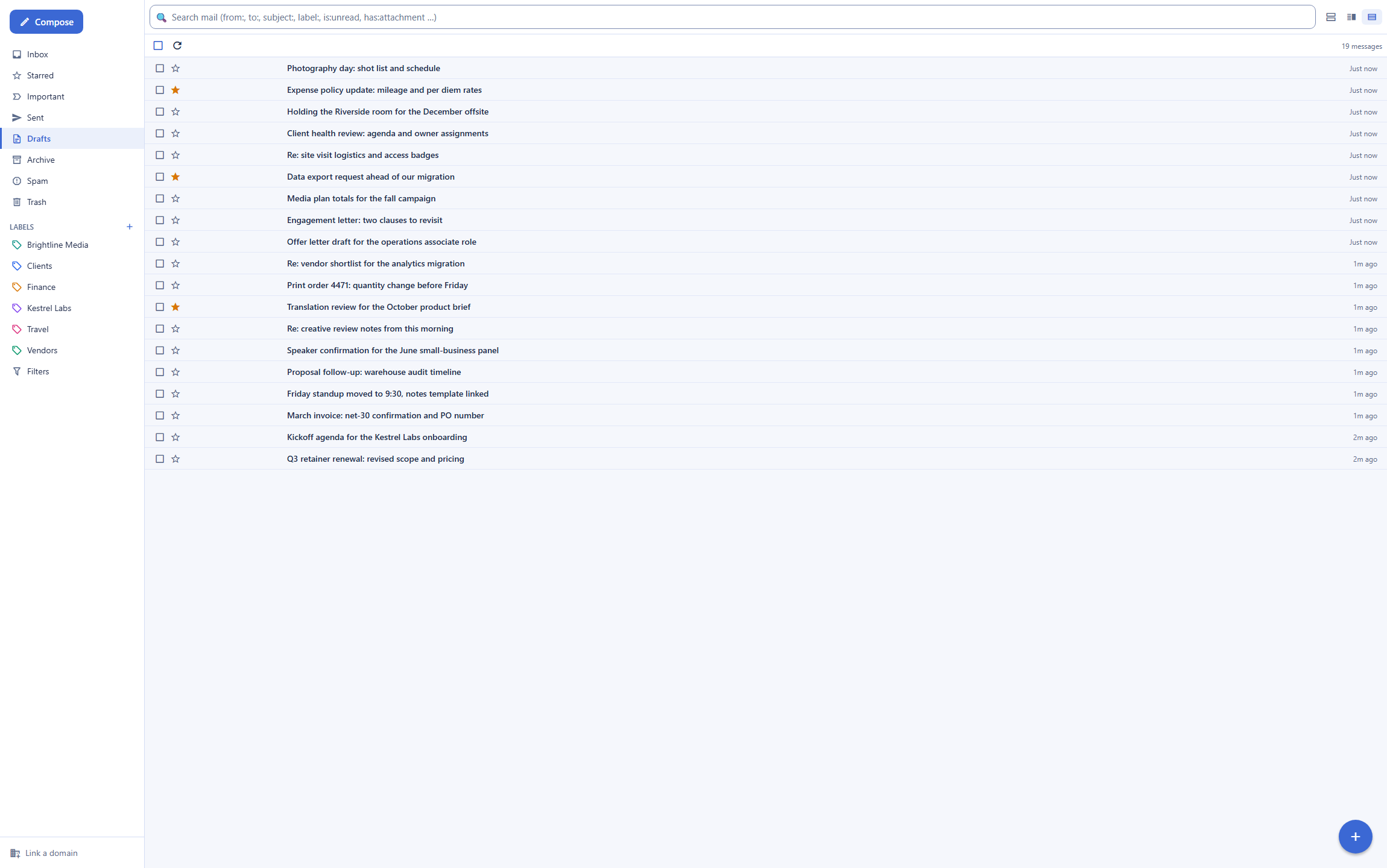
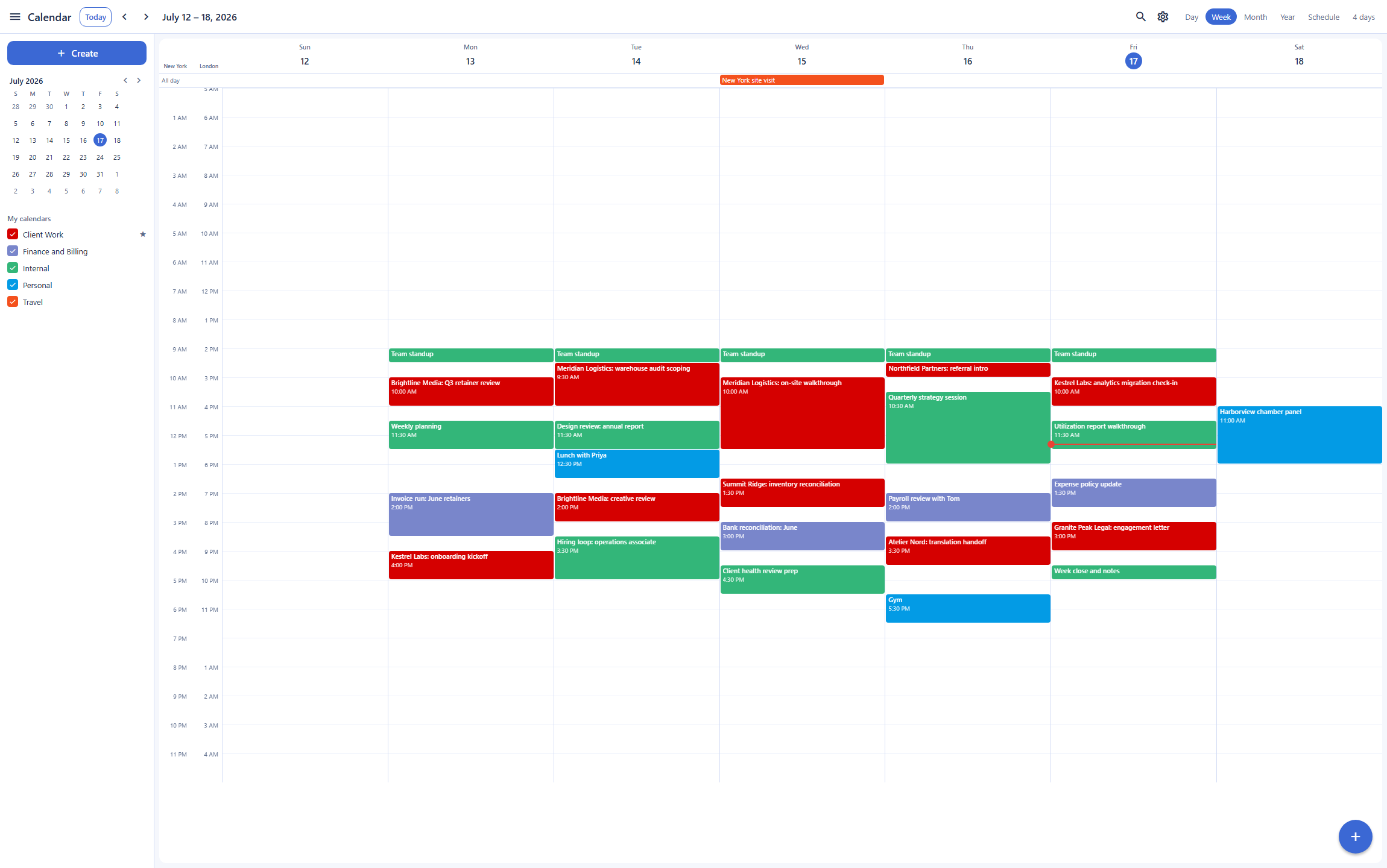
Backbuild Mail answers Outlook and Exchange with a real mail server that sends and receives at your own domain, with free custom domains and guided DNS setup and shared team mailboxes with read and write grants. Backbuild Calendar answers the Outlook calendar with recurring events, guests and replies, sharing, and find-a-time, and adds two-way sync with Google Calendar, Microsoft 365, and CalDAV, so a team can move gradually and keep both calendars in step. Backbuild Docs answers Word with a WYSIWYG editor that also offers a raw LaTeX source mode and live math, real-time co-authoring, and export to LaTeX, DOCX, ODT, HTML, Markdown, RTF, and EPUB. Backbuild Sheets answers Excel for everyday spreadsheets with a formula engine of more than 500 functions, charts, sorting, filtering, and validation, and SQLite export on paid plans, and Backbuild Slides answers PowerPoint with native LaTeX decks and PowerPoint and OpenDocument export. Where Microsoft 365 keeps a clear lead on the everyday apps is the depth of Excel, with pivot tables, Power Query, and Power Pivot, the installed full-fidelity desktop apps, and near-universal Office file interoperability.
A relational data platform Microsoft 365 does not have in-suite
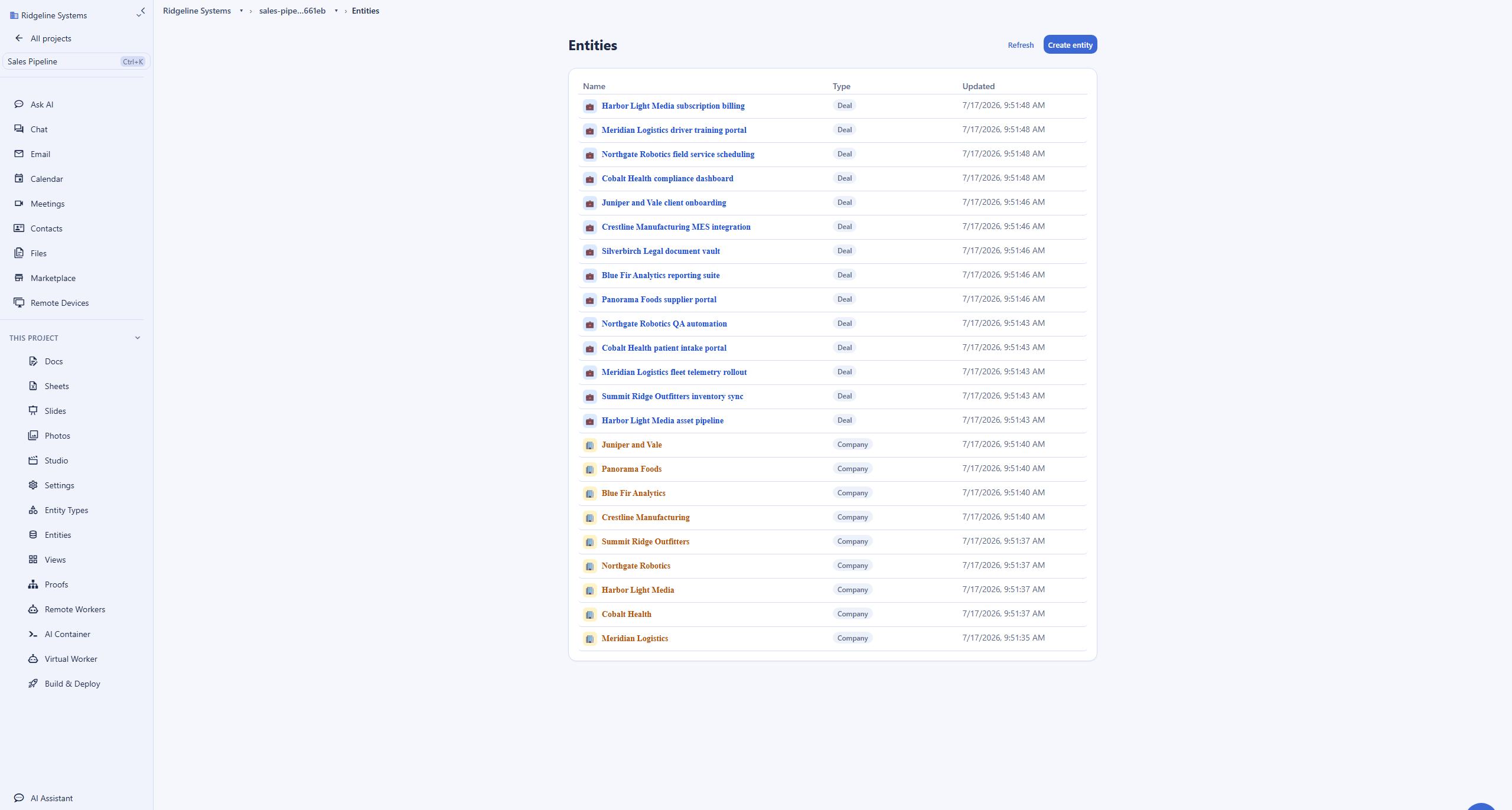
In Microsoft 365, structured data lives in an Excel workbook, and turning that data into an app means reaching for Power Apps and Dataverse, a separate licensed layer on the Power Platform. Backbuild ships a real relational database as part of the workspace. An entity type is the schema of one kind of record, a Deal, a Supplier, an Asset, with thirty-one field types including references to other records; entities are the records, each with an owner, sharing scopes, and a workflow state, and every change is audit logged. Typed relationships link records with a dedicated lookup field, rollups that aggregate across links, and enforced referential integrity. Saved views present one dataset as a table, board, list, calendar, timeline, or gantt, and automations react to record events, run on schedules, and dispatch webhook or AI-agent actions. There is no per-plan record cap, and the whole model is on the free plan.
Accounting and a secrets vault in the same subscription
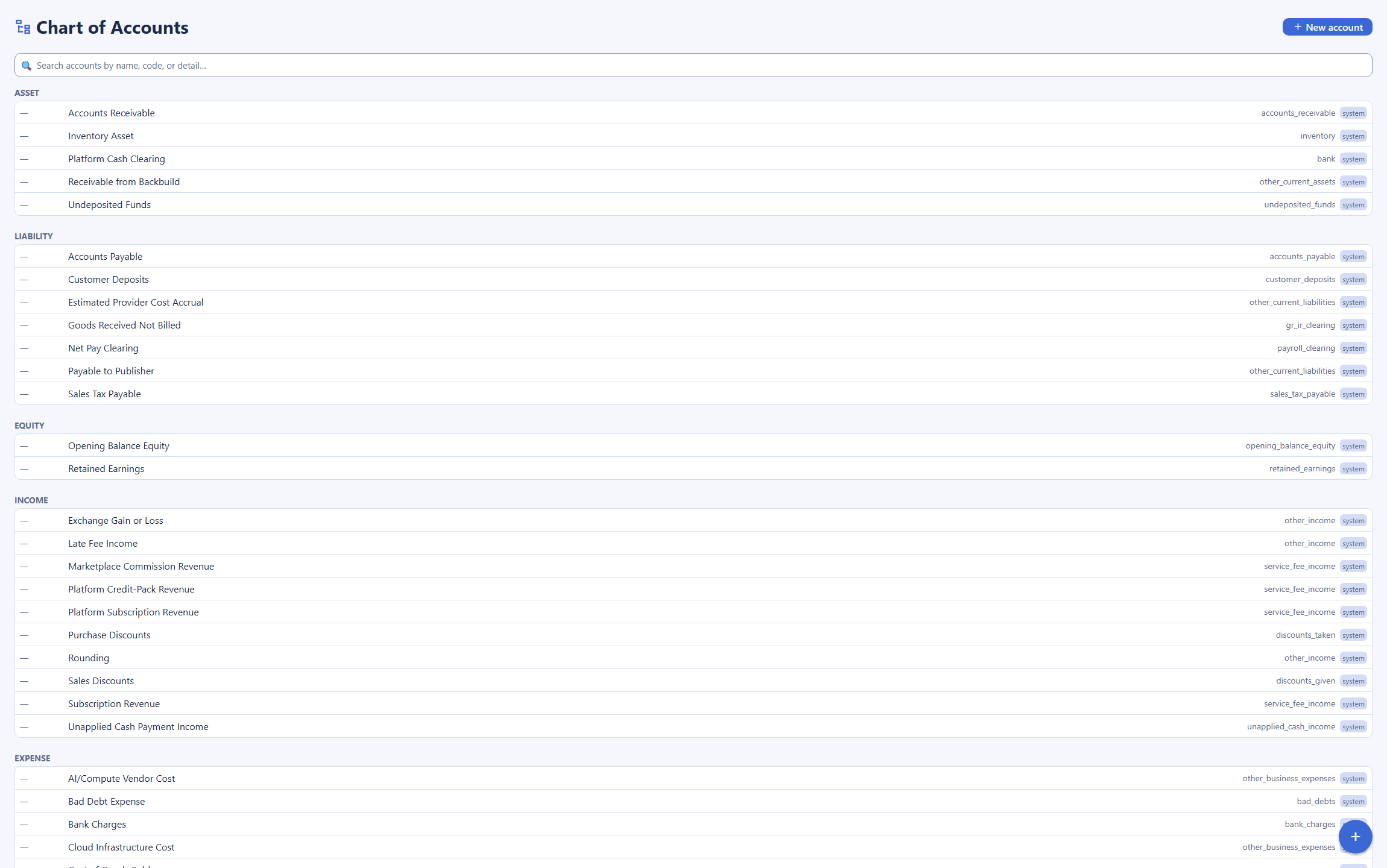
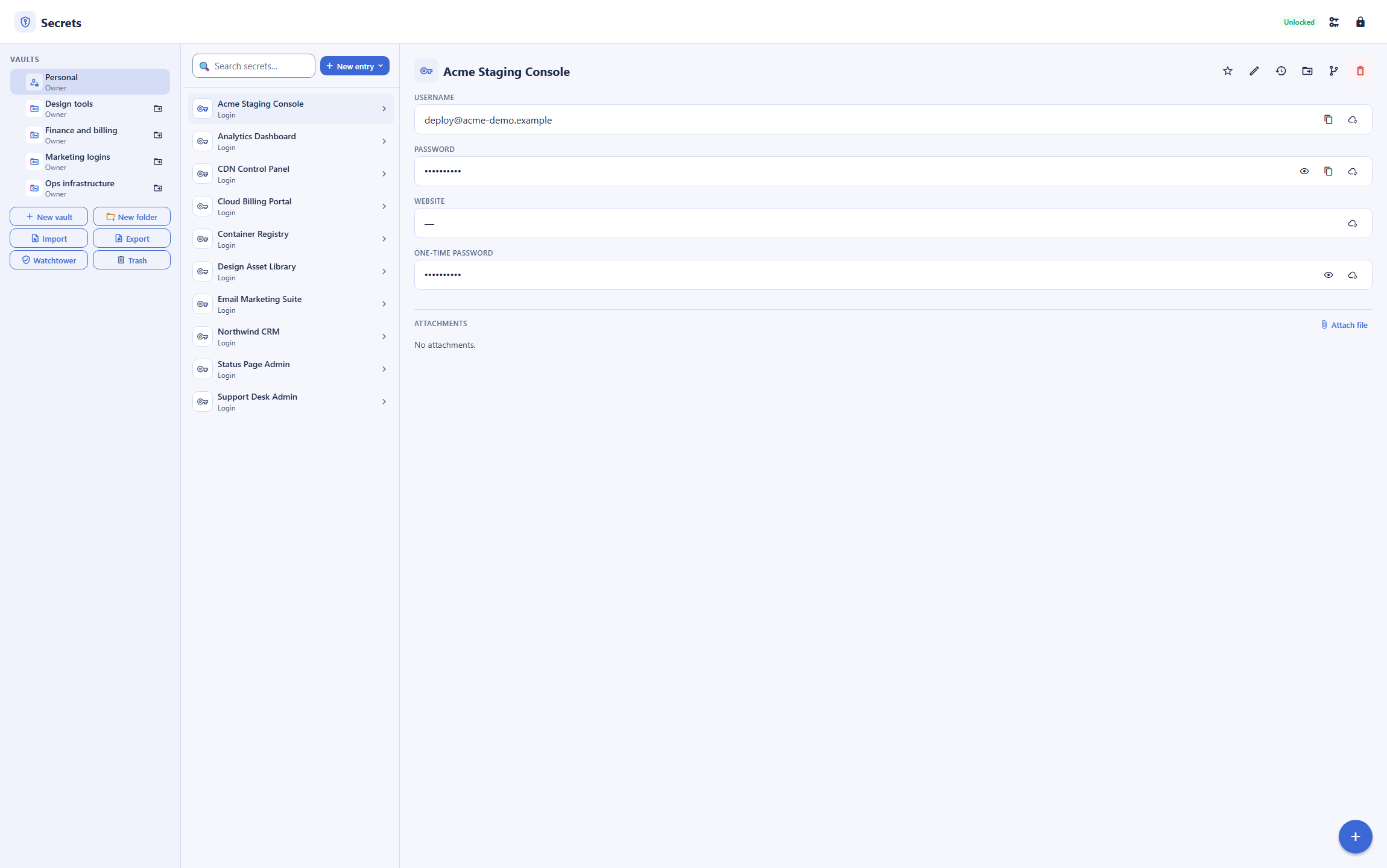
Microsoft 365 has no accounting product and no password manager in the business suite, so a company running on it buys those separately. Backbuild includes both. Backbuild Finances keeps a real double-entry general ledger with invoicing and accounts receivable, bills and expenses, bank reconciliation, and profit-and-loss and balance-sheet reports; payroll is recorded but not filed, and sales tax is tracked but not filed. Backbuild Secrets is a zero-knowledge, post-quantum vault for passwords and infrastructure secrets, and because it is in the same workspace, automated work draws credentials by grant so the model never sees a plaintext value. Alongside these sit Remote Desktop to your own machines and on-demand cloud desktops, and Virtual Workers that operate a real container, browser, desktop, and terminal, none of which have an in-suite Microsoft 365 equivalent.
Where Microsoft 365 wins today
Microsoft 365 is the far more established suite, with decades of operating history and a very large share of the business-productivity market, and several of its strengths are things Backbuild does not match today.
Excel depth and the installed desktop apps
Excel is deeper than Backbuild Sheets for serious analysis: pivot tables, Power Query, and Power Pivot handle large datasets and complex transformations that a lighter grid does not, and the installed desktop Word, Excel, and PowerPoint bring full-fidelity offline editing and VBA macros. A switcher who lives in deep Excel modeling gives up real capability, and Backbuild Sheets does not claim to match pivot tables or Power Query today.
Microsoft Teams for meetings and chat
Microsoft Teams is a mature, ubiquitous product for meetings, chat, and telephony, deeply integrated across the suite and familiar to most office workers. Backbuild Meetings and Chat are on the roadmap and not shipped, so for a team whose day runs on video calls and chat, Microsoft 365 is clearly ahead right now. Backbuild Calendar does sync two-way with Microsoft 365, so Teams meetings stay visible during a transition.
The Entra and Purview enterprise estate
Microsoft Entra ID is a mature enterprise identity platform with conditional access and privileged identity management, and Microsoft Purview is a deep compliance estate with data-loss prevention, retention, and eDiscovery mapped to hundreds of frameworks. Backbuild includes single sign-on, SCIM, and audit logging on every plan, but its compliance tooling is younger and does not yet match the breadth of the Purview estate on the higher Microsoft tiers.
Storage, ecosystem, and track record
OneDrive and SharePoint pool 1 terabyte of storage per user cheaply, and AppSource and the Power Platform are a vast ecosystem of add-ons and no-code tooling. Backbuild answers external connection with provider integrations, the full REST API, signed webhooks, MCP, and custom tools in the Tool Builder, but its catalog and community are smaller, and Microsoft has decades of track record behind it.
Common Microsoft 365 frustrations and how Backbuild addresses them
The 2026 price increase
Microsoft raised Microsoft 365 prices in July 2026, an increase that reviewers put at 5 to 43 percent across the range and that drew regulatory scrutiny. Backbuild is free for up to 50 seats, with paid plans from 19 to 149 US dollars per seat and one published credit pool for variable usage, so a small team’s workspace cost can be zero.
The Copilot AI add-on
Microsoft prices the full Copilot as an add-on of 18 to 21 US dollars per user per month on top of the base seat, and folded a lighter Copilot Chat into the tiers whether a team uses it or not. Backbuild includes the AI assistant on every plan, meters it on usage credits, and lets an organization bring its own AI providers and models, so inference can run at the provider’s own rate under the organization’s own agreement.
Governance features gated to higher tiers
On Microsoft 365, advanced Purview audit, data-loss prevention, and eDiscovery arrive on Business Premium and the enterprise E5 tier, and Entra ID conditional access sits on the P1 and P2 add-ons. Backbuild includes single sign-on, SCIM, and a tamper-evident audit log on every plan, including Free, with per-organization roles and per-field access controls and masking on records, so the identity and audit posture does not depend on the tier.
Teams resource use and complexity
Administrators report that Microsoft Teams consumes large amounts of memory even when idle, and users describe it as heavy and slow to switch between chats. Backbuild is browser-native with a lightweight desktop app, and its Meetings and Chat are on the roadmap as browser-based surfaces rather than a separate installed client, though a team that needs those today should keep Teams.
OneDrive and SharePoint sync friction
Administrators document recurring OneDrive and SharePoint sync failures and call the default SharePoint site structure confusing to manage. Backbuild keeps files in Backbuild Files with explicit folders and sharing scopes, and an entity in the data platform replaces the spreadsheet-and-sync pattern with governed records that do not need a desktop sync client to stay consistent.
Buying accounting and a password manager separately
A business on Microsoft 365 buys accounting and a password manager as extra subscriptions, because the suite has neither. Backbuild includes double-entry accounting and a zero-knowledge Secrets vault in the same workspace, so those two line items fold into one subscription rather than three.
Which platform wins, by use case
A small business running email, docs, and calendar at its own domain
This is the most common reason a team buys Microsoft 365: professional email at a custom domain, with Word, Excel, and PowerPoint and a shared calendar. Backbuild answers with Mail at your own domain from a real mail server, Docs, Sheets, Slides, and Calendar with two-way Google and Microsoft 365 sync, and it is free for up to 50 seats where Microsoft 365 charges from 7 US dollars per user per month with no free tier, and the cheaper Basic plan is web and mobile only with no installed apps. The counterweight is the installed desktop apps and Excel depth: a team that depends on offline Word and Excel with pivot tables gives up real capability, and Microsoft has the longer deliverability track record.
Deep spreadsheet analysis and data modeling
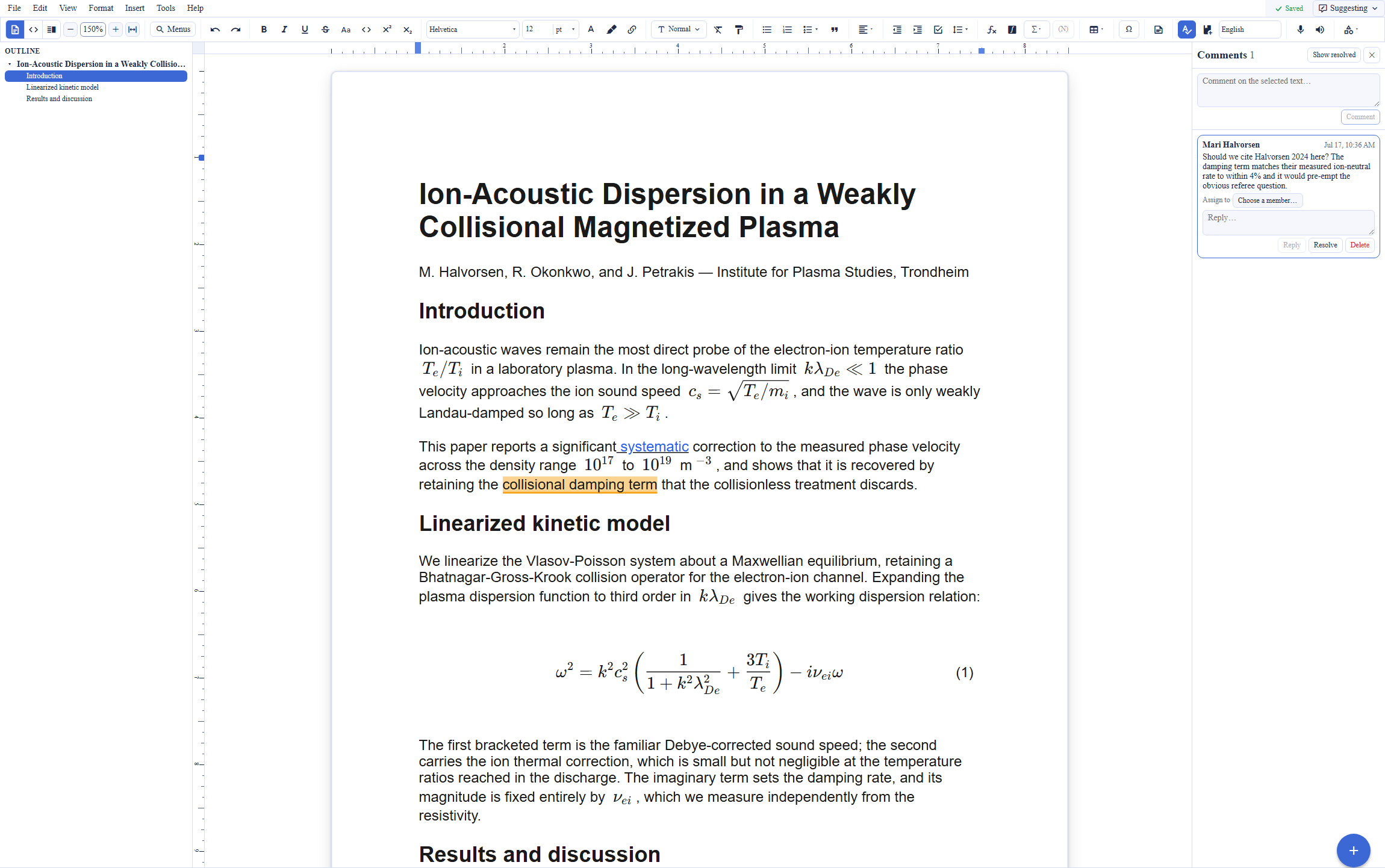
For analysts who live in Excel, Microsoft 365 is the stronger choice today. Pivot tables, Power Query, and Power Pivot are mature and comfortable over large datasets, and VBA macros and add-ins extend the grid deeply. Backbuild Sheets answers everyday spreadsheets with more than 500 functions, charts, and validation, but it does not match pivot tables or Power Query today. Where Backbuild changes the shape of the problem is structured data: work that a team forces into a sprawling spreadsheet, a tracker of suppliers, assets, or deals, moves to a real relational database of entity types with typed relationships, lookups, rollups, and referential integrity, which a spreadsheet models poorly.
Operations teams building internal tools and trackers
Teams on Microsoft 365 track suppliers, orders, and projects in an Excel workbook, then reach for Power Apps and Dataverse to turn the workbook into an app, a separate license with its own model. Backbuild builds the same tools on a real relational database: entity types and typed relationships with lookups, rollups, and referential integrity, presented through saved views and driven by automations on record events, schedules, and approval workflows, with no per-plan record cap, all on the free plan. The tradeoff that runs the other way is ecosystem: the Power Platform and AppSource are older and broader.
Running the back office: invoicing, accounting, and secrets
Microsoft 365 stops at documents and spreadsheets, so the books and the passwords live in separate products. Backbuild folds them in: invoicing and accounts receivable, a double-entry general ledger, bills, bank reconciliation, and financial statements in Backbuild Finances, and a zero-knowledge, post-quantum Secrets vault for the passwords and keys a business accumulates. Because both are in the workspace, a client tracked as an entity can be invoiced from the same platform, and automated work draws credentials by grant without exposing a plaintext value. Microsoft 365 has neither of these in the business suite; a company on it pays for accounting and a password manager separately.
Video meetings and team chat
For a team whose day runs on video calls and chat, Microsoft 365 is the stronger choice today. Microsoft Teams is mature and ubiquitous, with meetings, chat, and telephony deeply woven into the suite. Backbuild Meetings, browser calls with a lobby, waiting room, screen sharing, and moderation, is documented as coming soon, and Backbuild Chat is on the roadmap; neither is shipped. What Backbuild offers in the meantime is Calendar with two-way sync, so meetings scheduled in Teams stay visible in Backbuild during a transition.
Automations, the API, and AI agents
Microsoft 365 automates through Power Automate and the Microsoft Graph API, a unified endpoint that still reaches each workload separately and applies per-workload throttling limits. Backbuild’s REST API spans the whole platform from one OpenAPI specification with no monthly call quota; the data-model group alone documents 72 endpoints. Its automations can run on a real containerized computer with a browser, desktop, terminal, and the full Linux tool suite, draw vault secrets by grant, and expose every capability to AI agents over MCP, so one prompt to a linked AI tool can build the model, records, views, and a document end to end. Microsoft answers automation with Power Automate, which adds a premium desktop RPA runner, and agent access through Copilot Studio, but the suite is not exposed as one platform-wide MCP surface.
Consolidating a stack into one subscription
A Microsoft 365 stack usually carries companion subscriptions around it: an accounting product, a password manager, a remote-access or Windows 365 tool, a help desk, and often Power Apps or a database for internal tools. Backbuild consolidates those into one workspace: Mail, Calendar, Docs, Sheets, Slides, Files, Photos, the data platform, Finances, Secrets, Remote Desktop, a help desk, and a training course system, each of which is a separate invoice or a higher tier in a Microsoft-centered stack. The exception is real-time communication: Microsoft Teams remains with Microsoft until Backbuild Meetings and Chat ship.
Security, identity, and governance evaluation
A security review of a workspace platform turns on four questions: who can get in, what each person can see, what record survives every change, and what the answers cost. On identity, Backbuild ships single sign-on on every plan, including Free, and SCIM 2.0 user provisioning across plans. Microsoft 365 provides identity through Microsoft Entra ID, a mature and deep stack with single sign-on and directory provisioning, though its stronger controls, conditional access and privileged identity management, sit on the Entra ID P1 and P2 add-ons.
On authorization and evidence, the difference is where the floor sits. Backbuild applies organization-scoped roles beneath record-level sharing scopes with per-field access modes and masking, and re-filters every view execution to the running viewer’s access on the server, and it writes a tamper-evident audit log on every plan. Microsoft 365 answers with the deep Microsoft Purview estate: data-loss prevention, retention, sensitivity labels, and eDiscovery mapped to hundreds of compliance frameworks, but the advanced controls arrive on Business Premium and the enterprise E5 tier, so a small team on Business Basic does not have them. Credentials the workspace touches can live in Backbuild’s zero-knowledge, post-quantum vault, and automated work draws them by grant so the model never sees a plaintext value; on AI governance, an organization can bring its own AI providers and models so inference runs under its own agreement, where Copilot runs as the bundled model.
The tradeoffs run both ways. Microsoft 365 is the older platform, with a long independent track record, published compliance attestations, the deepest enterprise security and compliance tool set in Purview and Intune, and a large base of administrators who already know its controls. Backbuild is newer, and while it is built to the standards auditors check, it does not yet carry that long history or the breadth of the Purview estate. The bottom line: if the evaluation demands single sign-on, SCIM, fine-grained record access, a zero-knowledge secrets store, and audit evidence without an upgrade, Backbuild’s floor is materially higher on every plan; if it demands a mature enterprise security and compliance estate with data-loss prevention, endpoint management, and a decade of operating history, Microsoft 365 has more of it today on its higher tiers.
The economics for a finance and procurement review
The Microsoft 365 line item is per user per month on an annual commitment, and it moved in 2026: Business Basic runs 7 US dollars per user, Business Standard 14, and Business Premium 22, billed annually, after an increase that reviewers put at 5 to 43 percent and that folded Copilot Chat into the tiers. There is no free business plan, only a one-month trial, so the cost begins at the first seat, and the capability a team needs often sets the tier: the installed desktop apps require Business Standard or higher, and advanced compliance arrives on Premium and E5, with the full Copilot a further 18 to 21 US dollars per user.
Backbuild’s model is different in shape: the workspace is free to 50 seats, paid plans run 19 to 149 US dollars per seat, and variable usage such as AI and cloud desktops draws one published credit pool. The consolidation math matters as much as the rate card: the same subscription includes accounting, a secrets vault, a data platform, a help desk, and remote desktop, each of which is a separate invoice or a higher tier in a Microsoft-centered stack. The counterweights are Excel depth and storage: a team that depends on Excel pivot tables and Power Query keeps a real reason to pay for the desktop apps, and OneDrive pools 1 terabyte per user cheaply where Backbuild meters storage growth on credits. The bottom line: Microsoft 365’s cost is a predictable per-seat line that climbs with the tier and the Copilot add-on a team needs; Backbuild’s starts at zero for up to 50 seats and grows with seats and metered usage you can read on one page, and it absorbs several separate subscriptions in the process.
Rolling it out across a team
Adoption risk on a workspace suite is concentrated in the switch itself: email at the domain has to keep flowing, calendars have to stay in step, and the team’s files and habits have to move without a gap. Microsoft 365’s advantage here is ubiquity: nearly everyone has used Outlook, Word, Excel, and Teams, and its installed apps and offline access are mature. Backbuild reduces the switch risk with two-way calendar sync to Google and Microsoft 365, so a team can run both calendars during a transition, and with familiar document and spreadsheet editors and an assistant that builds internal tools from a prompt.
On governance during rollout, the structural difference is that Backbuild’s private-by-default views with server-side re-filtering let a lead share a working surface without widening data access, and the rollout inherits the rest of the workspace on day one, including the built-in help desk, so questions about the new tooling have somewhere to live without another purchase. The unavoidable caveats are real-time communication and Excel: because Backbuild Meetings and Chat have not shipped, a rollout that depends on built-in video and chat should keep Microsoft Teams in place for now, and analysts who depend on Excel pivot tables and Power Query should keep Excel for that work. The bottom line: pilot both with the actual daily surface in mind. If the team lives in installed Excel, Teams, and mature offline apps, Microsoft 365 is the smoother path today; if it lives in documents, everyday spreadsheets, internal tools, and the back office, Backbuild rolls out at zero cost for the whole team with governance included from the first seat.
Data ownership, migration, and lock-in
The exit question deserves as much scrutiny as the entrance. Microsoft 365 data leaves through per-service exports and admin tooling, and the practical friction is spread across Exchange, OneDrive, SharePoint, and the Graph API, each with its own path. Backbuild’s export posture is broad by design: Backbuild Docs exports to LaTeX, DOCX, ODT, HTML, Markdown, RTF, and EPUB, Backbuild Sheets exports Excel and, on paid plans, SQLite, and the full REST API returns every record, type, relationship, and view, with no call quota to meter the exit.
Migration into Backbuild has two lanes. The everyday content imports directly: Word documents as DOCX, Excel workbooks as XLSX, PowerPoint decks as PPTX, and the calendar connects through two-way sync so events stay in place while a team moves. Structured data, the trackers and internal tools a team built in Excel or Power Apps, is rebuilt through the entities API: create the types, then load records and relationships, or hand the exported data to an AI agent over MCP and let it build the types, records, views, and automations end to end. The bottom line: both platforms let you leave, but Backbuild’s wider document export, SQLite export, uncapped API, and agent-drivable loading make both directions of the move cheaper to execute, while Microsoft’s advantage is the near-universal compatibility of the Office file formats themselves.
Strategic fit and vendor risk
Microsoft 365 is the category incumbent, and the strategic case for it is maturity and reach: a long operating history, an enormous installed base, the deepest ecosystem of AppSource add-ons and the Power Platform, mature real-time communication, and a compliance estate few vendors match. The risk on that side is pricing power and complexity: the 2026 increase that raised seat prices and layered on the Copilot add-on, and the regulatory action over how the Copilot price change was presented, show how a workspace committed to the suite absorbs vendor pricing decisions, and administrators raise Teams resource use and sync management as recurring frictions.
Backbuild’s strategic case is breadth and consolidation: the everyday apps plus a real data platform, accounting, a secrets vault, remote desktop, and virtual workers in one subscription, security included rather than tiered, an OpenAPI-documented exit, and an open agent protocol across the platform as the AI strategy rather than a single bundled model. The real risks: it is the younger vendor and pre-launch, its Meetings and Chat have not shipped, its native mobile apps are still coming, Excel is deeper than Backbuild Sheets, and its ecosystem, compliance estate, and storage economics are smaller than Microsoft’s. The bottom line: choose Microsoft 365 when deep Excel, the installed desktop apps, Teams, ecosystem breadth, and decades of track record are the controlling criteria; choose Backbuild when the everyday suite plus a data platform, accounting, a secrets vault, a security floor on every plan, and AI openness matter more, and built-in video and chat and deep Excel can wait or run alongside.
Frequently asked questions
Is there a free alternative to Microsoft 365?
Yes. Microsoft 365 has no permanent free tier for business; it offers a one-month trial and then charges per user per month on an annual commitment. The Backbuild workspace is free for teams of up to 50 seats, and the free plan includes email at your own domain, Calendar, Contacts, Docs, Sheets, Slides, Photos, and Files, plus a relational data platform, double-entry accounting, and a Secrets vault, with single sign-on, SCIM, and a tamper-evident audit log on every plan. A small team can run its whole workspace on Backbuild at no cost, where the same team on Microsoft 365 pays from 7 US dollars per user per month for Business Basic, which is web and mobile Office only with no installed desktop apps.
What is cheaper than Microsoft 365?
Backbuild is, at the small-team scale. Microsoft 365 Business Basic begins at 7 US dollars per user per month billed annually, Business Standard at 14, and Business Premium at 22, and Microsoft raised these prices in July 2026 and folded Copilot Chat into the tiers, with the full Copilot add-on a further 18 to 21 US dollars per user. Backbuild is free for up to 50 seats, with paid plans from 19 to 149 US dollars per seat, and variable usage such as AI and cloud desktops draws one published credit pool. Where Microsoft 365 still has the advantage is the installed desktop Office apps and the depth of Excel, which the cheaper Basic plan does not even include, and OneDrive bulk storage of 1 terabyte per user.
Can Backbuild replace Microsoft 365?
For most of the everyday work, yes. Outlook and Exchange email at your own domain move to Backbuild Mail on a real mail server, Word, Excel, and PowerPoint move to Backbuild Docs, Sheets, and Slides, the Outlook calendar moves to Backbuild Calendar with two-way Google, Microsoft 365, and CalDAV sync, and OneDrive and SharePoint files move to Backbuild Files. Backbuild then adds surfaces Microsoft 365 has no in-suite equivalent for: a relational data platform, double-entry accounting, a Secrets vault, Remote Desktop, and Virtual Workers. Microsoft 365 remains the stronger choice when the deciding factor is deep Excel analysis with pivot tables and Power Query, the installed offline desktop apps, Microsoft Teams meetings, or the Microsoft Entra and Purview enterprise estate. Backbuild Meetings and Chat are on the roadmap and not shipped yet, so a team that needs built-in video and chat now should weigh that against Teams.
Does Backbuild replace Microsoft Excel?
For everyday spreadsheets, Backbuild Sheets answers Excel with a formula engine of more than 500 functions, charts, sorting, filtering, and validation, and it adds a real relational database through entity types for structured data that a spreadsheet handles poorly. Where Excel keeps a clear lead is advanced analysis: pivot tables, Power Query, Power Pivot, and comfortable work over very large datasets are mature in Excel and not matched by Backbuild Sheets today. A team whose work depends on deep pivot-table modeling and Power Query transformations should keep Excel for that work, while lighter spreadsheets and structured trackers move comfortably to Backbuild.
Does Backbuild have video meetings and chat like Microsoft Teams?
Not yet. Backbuild Meetings, browser-based calls with a lobby, waiting room, screen sharing, and moderation, is on the roadmap and documented as coming soon, and Backbuild Chat is on the roadmap as well. Microsoft Teams is a mature, ubiquitous product today, with meetings, telephony as an add-on, and deep integration across the suite, so for a team whose first requirement is built-in video meetings or team chat, Microsoft 365 is the stronger choice right now. Backbuild does ship a full calendar with two-way sync to Microsoft 365, so meetings scheduled in Teams remain visible in Backbuild Calendar during a transition.
What is the best Microsoft 365 alternative for data sovereignty and privacy?
Backbuild carries several controls that a sovereignty-focused or privacy-focused team looks for. The Secrets vault is zero-knowledge and post-quantum, so the platform cannot read a stored secret and automated work draws credentials by grant without ever seeing a plaintext value. Single sign-on, SCIM, role-based access control, and a tamper-evident audit log are on every plan rather than reserved for higher tiers, and an organization can bring its own AI providers and models so inference runs under its own provider agreement rather than a bundled Copilot model. Microsoft 365 answers with the mature Microsoft Entra identity and Microsoft Purview compliance estate, including data-loss prevention, retention, and eDiscovery, though those controls sit on Business Premium and the enterprise E3 and E5 tiers.
How do I migrate from Microsoft 365 to Backbuild?
The everyday content moves along separate lanes. Word documents export as DOCX and import into Backbuild Docs, Excel workbooks export as XLSX and CSV and import into Backbuild Sheets, and PowerPoint decks export as PPTX and import into Backbuild Slides. The Outlook calendar connects through two-way sync to Microsoft 365, so events stay in place while a team transitions, and Backbuild Mail receives at your own domain once the domain DNS is pointed. Structured data such as trackers and internal tools built in Excel or Power Apps is rebuilt as entity types, records, views, and automations, either through the entities REST API or by handing the exported data to an AI agent over the Model Context Protocol, which can build the model end to end. Everything exports back out at any time through the same platform API, with no call quota to meter the exit.
What does Microsoft 365 do better than Backbuild?
Several things. Excel is deeper than Backbuild Sheets for pivot tables, Power Query, Power Pivot, and very large datasets, and Microsoft 365 ships installed full-fidelity desktop Word, Excel, and PowerPoint with mature offline editing. Microsoft Teams meetings and telephony are ubiquitous where Backbuild Meetings and Chat are on the roadmap. The Microsoft Entra identity estate and the Microsoft Purview compliance estate are mature and deep, OneDrive and SharePoint pool cheap bulk storage of 1 terabyte per user, AppSource and the Power Platform are a vast ecosystem, and Microsoft has decades of operating history and near-universal Office file interoperability. Backbuild is newer and pre-launch, in early adopter alpha.
Try the full Backbuild workspace free
The everyday suite, Mail at your own domain, Calendar, Docs, Sheets, Slides, Photos, and Files, plus a relational data platform, double-entry accounting, a zero-knowledge secrets vault, remote desktop, and virtual workers, with single sign-on, SCIM, and audit logging on every plan and a full-platform REST API, free for up to 50 seats. If the deciding factors are deep Excel, the installed desktop Office apps, Microsoft Teams, or the Microsoft Entra and Purview enterprise estate, Microsoft 365 is the stronger choice today.
Get started free