

FreshBooks alternative: Backbuild Finances vs FreshBooks
FreshBooks is a focused invoicing and accounting app for freelancers and small businesses; on the Backbuild side that job is done by Backbuild Finances, the double-entry books built into the Backbuild workspace, together with the AI assistant, a full public REST API and HMAC-signed webhooks, entities and views for finance-adjacent data, per-organization roles and audit logging, and the rest of the all-in-one workspace. FreshBooks still leads today on its polished invoicing, its client account portal, proposals with e-signature, and client retainers, native online payments on every plan, automated bank feeds, mature native mobile apps, and its large adoption and established accountant network.
The short answer
Backbuild Finances keeps real double-entry books and invoicing inside the all-in-one Backbuild workspace at no separate cost and with no billable-client cap; FreshBooks is the polished, focused invoicing and accounting product with a client portal, proposals, native online payments, and mature mobile apps. Choose Backbuild Finances if you want real books, invoicing, estimates, purchase orders, inventory, bank reconciliation, budgets, and job costing free and inside an all-in-one workspace, with no client limit, a full public REST API, webhooks, and no separate accounting subscription. Choose FreshBooks if your first requirement is a client account portal, proposals with e-signature, or client retainers, native online payments through the invoice on every plan, automated bank feeds, or a mature native mobile app. Backbuild records payroll and tracks sales tax but files neither, imports bank transactions while broad live feeds roll out, does not yet take payments online through a pay-by-link, and does not offer a client portal, proposals, or retainers today.
Backbuild Finances vs FreshBooks: feature by feature
FreshBooks has no free plan; its Lite plan is $23 a month and caps you at five billable clients, and unlimited billable clients start on Premium at $70, with $11 a month for each extra team member. Prices below are from FreshBooks' own pricing and dated third-party coverage, observed 2026-07-20. The highlighted column is Backbuild Finances.
| Backbuild Finances Real double-entry books and invoicing inside the all-in-one workspace In the workspace on every plan, including Free (core books, estimates, purchase orders, inventory, plus 5 invoices/mo). No billable-client cap. Unlimited invoicing, sales-tax tracking, and Stripe come with paid tiers from $19/seat/mo. Get Started Free | FreshBooks A polished, focused invoicing and accounting product for freelancers and small businesses Lite $23/mo (5 billable clients); Plus $43/mo (50 clients, adds double-entry accounting and reports, bank reconciliation, proposals, retainers, accountant access); Premium $70/mo (unlimited clients). Team members $11/mo each. No free plan, 30-day trial. | |
|---|---|---|
| Price and cost model | ||
| Free plan | Trial only, no free tier | |
| Accounting and invoicing is a separate subscription | No, in the workspace | Yes, per plan |
| Billable-client limit | No client cap | 5 on Lite, 50 on Plus, unlimited on Premium |
| Per-team-member add-on fee | Seats include the whole workspace | $11/mo each on top of the plan |
| Full double-entry accounting reports without a higher tier | Every plan, free | Plus, $43 |
| Invoicing and getting paid | ||
| Professional and recurring invoicing | 5/mo free, unlimited on paid | |
| Estimates and quotes that convert to invoices | ||
| Progress invoicing for staged jobs | Retainers and deposits | |
| Purchase orders that convert to bills | Not offered | |
| Client account portal | Not offered | |
| Proposals with e-signature | Not offered | Plus and above |
| Client retainers | Not offered | Plus and above |
| Take a customer payment online with a pay-by-link Soon | On the roadmap | Every plan, Stripe-powered |
| Connect Stripe to record payments | Paid tiers | |
| Core accounting | ||
| Double-entry general ledger and chart of accounts | Every plan | Plus, $43 |
| Journal entries | Plus and above | |
| Bank reconciliation | Plus and above | |
| Profit and loss, balance sheet, trial balance | Plus and above | |
| Inventory tracking and cost of goods | Not offered | |
| Fixed assets and depreciation | Not offered | |
| Loans and amortization | Not offered | |
| Budgets and budget-versus-actual | Every plan | Not offered |
| Classes, locations, and dimensions | Every plan | Not offered |
| Consolidated and custom reports | Standard reports only | |
| Bank feeds and capture | ||
| Automated live bank feeds across thousands of banks | Import now, live feeds rolling out | Plaid feeds |
| Bank rules to auto-categorize transactions | ||
| Receipt and bill capture | AI doc extract, drafts for review | Mobile receipt capture |
| Time, projects, and mileage | ||
| Time tracking with a timer | Every plan | Every plan |
| Projects and job costing | Every plan | Every plan |
| Mileage tracking | Every plan | Mobile, every plan |
| Payroll and tax filing (regulated) | ||
| Record payroll to the books | Gusto add-on | |
| Files and pays your payroll taxes for you | Gusto add-on, extra | |
| Sales-tax tracking and liability report | Paid tiers | |
| Automation, API, and AI | ||
| Full public REST API for the books | FreshBooks API | |
| HMAC-signed outbound webhooks with a delivery log | Webhooks | |
| Entities, views, and automations for finance-adjacent data | Every plan | Standalone accounting |
| AI reads receipts and statements but never auto-posts | Receipt extraction | |
| Bring your own AI provider and model | Not offered | |
| Security, identity, and governance | ||
| Per-organization roles and audit logging | Every plan | Team roles |
| Single sign-on with a tamper-evident audit log | Every plan | Not on standard plans |
| Data isolated per organization | Per account | |
| Encrypted vault for tax IDs and secrets | Not offered | |
| Ecosystem, accountants, mobile, and trust | ||
| Accountant or bookkeeper already knows it | Newer, no advisor network | Accounting Partner Program |
| Large third-party integration catalog | REST API, webhooks, connectors | App integrations |
| Mature native mobile apps (iOS and Android) Soon | Native desktop today, mobile coming soon | 4.7 iOS, 4.8 Android |
| Established base and track record | Newer product | 30M-plus users, 160-plus countries |
| Workspace apps that ride along | ||
| Email at your own domain (Backbuild Mail) | Standalone accounting | |
| Team chat (Backbuild Chat) Soon | On the roadmap | Standalone accounting |
| Meetings and video (Backbuild Meetings) Soon | On the roadmap | Standalone accounting |
| Calendar (Backbuild Calendar) | Standalone accounting | |
| Contacts (Backbuild Contacts) | Clients only | |
| Documents (Backbuild Docs) | Standalone accounting | |
| Spreadsheets (Backbuild Sheets) | Report export only | |
| Presentations (Backbuild Slides) | Standalone accounting | |
| Diagrams (Backbuild Diagrams) Soon | On the roadmap | Standalone accounting |
| Photos and the photo editor (Backbuild Photos) | Receipt images only | |
| Training-video studio (Backbuild Studio) | Standalone accounting | |
| Video, audio, and music editors Soon | Authoring preview | Standalone accounting |
| Files and storage (Backbuild Files) | Attachments only | |
| Help desk and support tickets (Backbuild Helpdesk) | 20/mo free, unlimited on paid | Standalone accounting |
| Encrypted password and secrets vault (Backbuild Secrets) | Not offered | |
A cross means the tool does not offer the feature today. FreshBooks prices, plans, and features are quoted from FreshBooks pricing, the FreshBooks payments page, the FreshBooks mobile page, the FreshBooks accountant program, the FreshBooks developer platform, and dated coverage at NerdWallet and Expanded Ramblings, observed 2026-07-20. Backbuild capabilities are cited to the Backbuild Finances documentation, the API reference, the webhooks documentation, and the pricing page; rows marked Soon are on the Backbuild roadmap, not shipped.
Two different shapes of the same job
FreshBooks built its reputation on making invoicing pleasant for people who are not accountants, and it is genuinely good at that: polished invoices you can send in a few clicks with automated reminders, a client account portal, proposals with e-signature, and client retainers, native online payments on every plan, and mature mobile apps rated 4.7 and 4.8. It is also a separate subscription that caps billable clients by plan, charges $11 a month for each extra team member, and gates double-entry accounting and its reports to the $43 Plus tier. Backbuild Finances keeps the same daily work, invoicing, estimates, bills, reconciliation, and statements, but free and inside the all-in-one workspace you already use for the rest of your work, with no client cap, and it reaches deeper into the ledger with inventory, fixed assets, budgets, classes, and consolidated reports that FreshBooks does not offer. Where you need a self-service client portal, proposals, native payments through the invoice, or a mature mobile app, FreshBooks leads. Where you want real, deeper books at no separate cost with a public API and per-organization governance, Backbuild is the stronger value; it records payroll and tracks sales tax but files neither.
Where FreshBooks wins today
FreshBooks is a mature, widely adopted product, and several of its strengths are things Backbuild Finances does not do today.
A polished invoice and a client portal
FreshBooks is built around the invoice, and it shows: clean, professional invoices with automated reminders and a Client Account Portal on every plan where a customer views estimates and invoices, approves them, pays, and asks questions. Backbuild raises and tracks the same documents but does not offer a client-facing portal today.
Proposals, retainers, and native payments
FreshBooks offers proposals with e-signature and client retainers on Plus and above, and native online payments on every plan powered by Stripe, so a client pays the invoice directly. Backbuild does not have proposals with e-signature or retainers, records payments on paid tiers, and a customer-facing pay-by-link is on the roadmap.
Automated bank feeds and a mature mobile app
FreshBooks pulls transactions automatically through Plaid feeds and ships native iOS and Android apps rated 4.7 and 4.8 with on-the-go receipt capture and mileage. Backbuild imports and reconciles transactions today while broad live feeds roll out, ships native desktop apps, and its mobile app is still coming soon.
Adoption and the accountant network
FreshBooks has large adoption across more than 160 countries and an Accounting Partner Program, so many bookkeepers already know it. Backbuild answers the integration side with a REST API, webhooks, and connectors, but it does not carry that established base or advisor network.
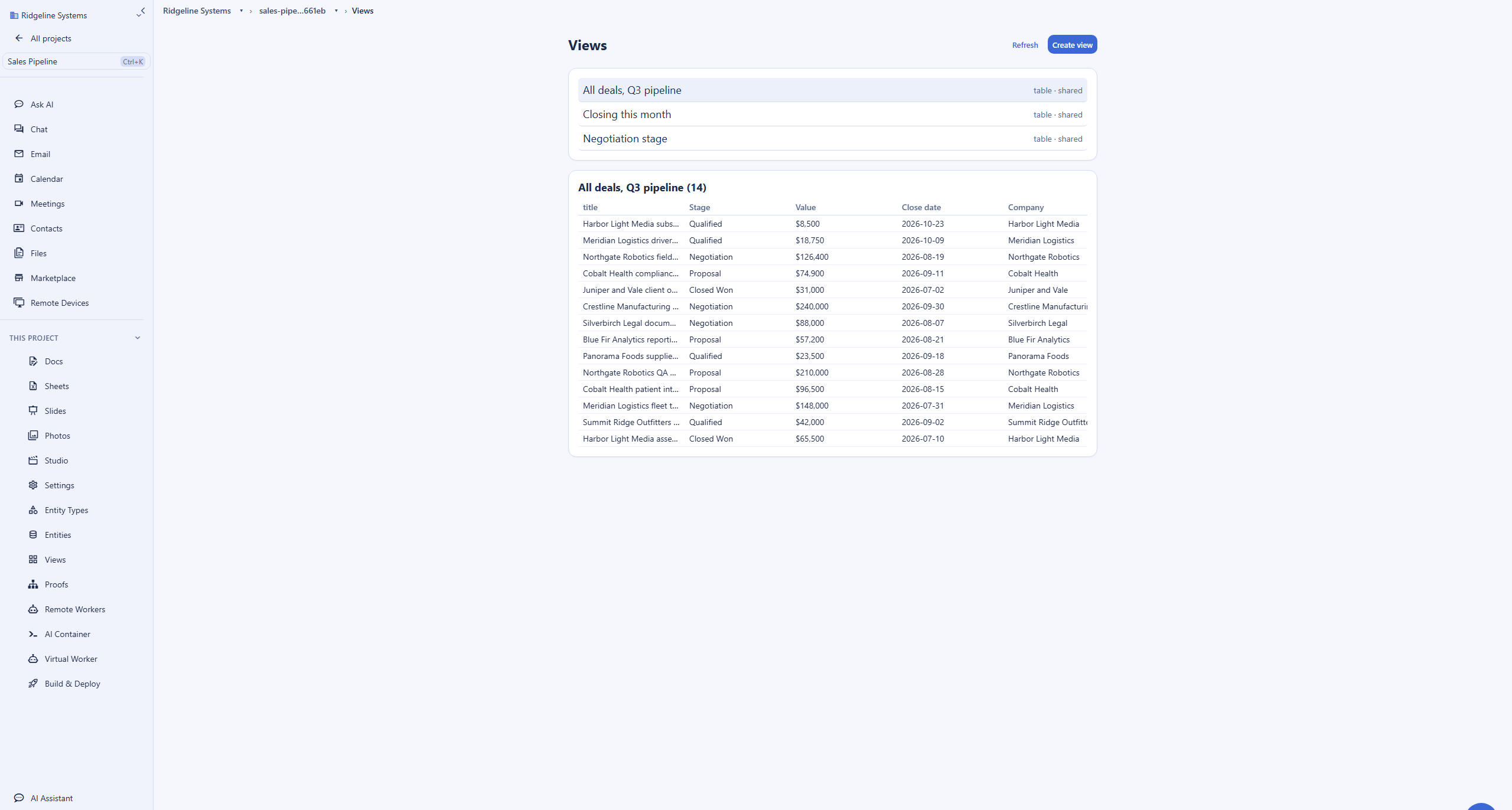
Common FreshBooks frustrations and how Backbuild Finances addresses them
Prices that keep climbing
A frequent FreshBooks complaint is that prices rise year over year while the plan feels the same. Backbuild Finances is part of the workspace, not a separate accounting subscription that grows on its own schedule.
The five-client cap and per-member fee
FreshBooks caps billable clients at five on Lite and fifty on Plus, and adds $11 a month per extra team member, so growing usually means paying up a tier. Backbuild has no billable-client cap on any plan, and its seats buy the whole workspace, not a per-person accounting surcharge.
Outgrowing it on the accounting side
Reviewers note that FreshBooks has no inventory management and thinner reporting than full accounting products, so product businesses eventually move on. Backbuild includes inventory and cost of goods, fixed assets, budgets, classes, and consolidated reports on every plan, so the books grow with you.
Another silo away from your work
FreshBooks is a standalone product separate from where you write, email, and store files. Backbuild Finances lives in the same all-in-one workspace as the rest of your work, so the client you invoice and the client you email are one record.
Which tool wins, by use case
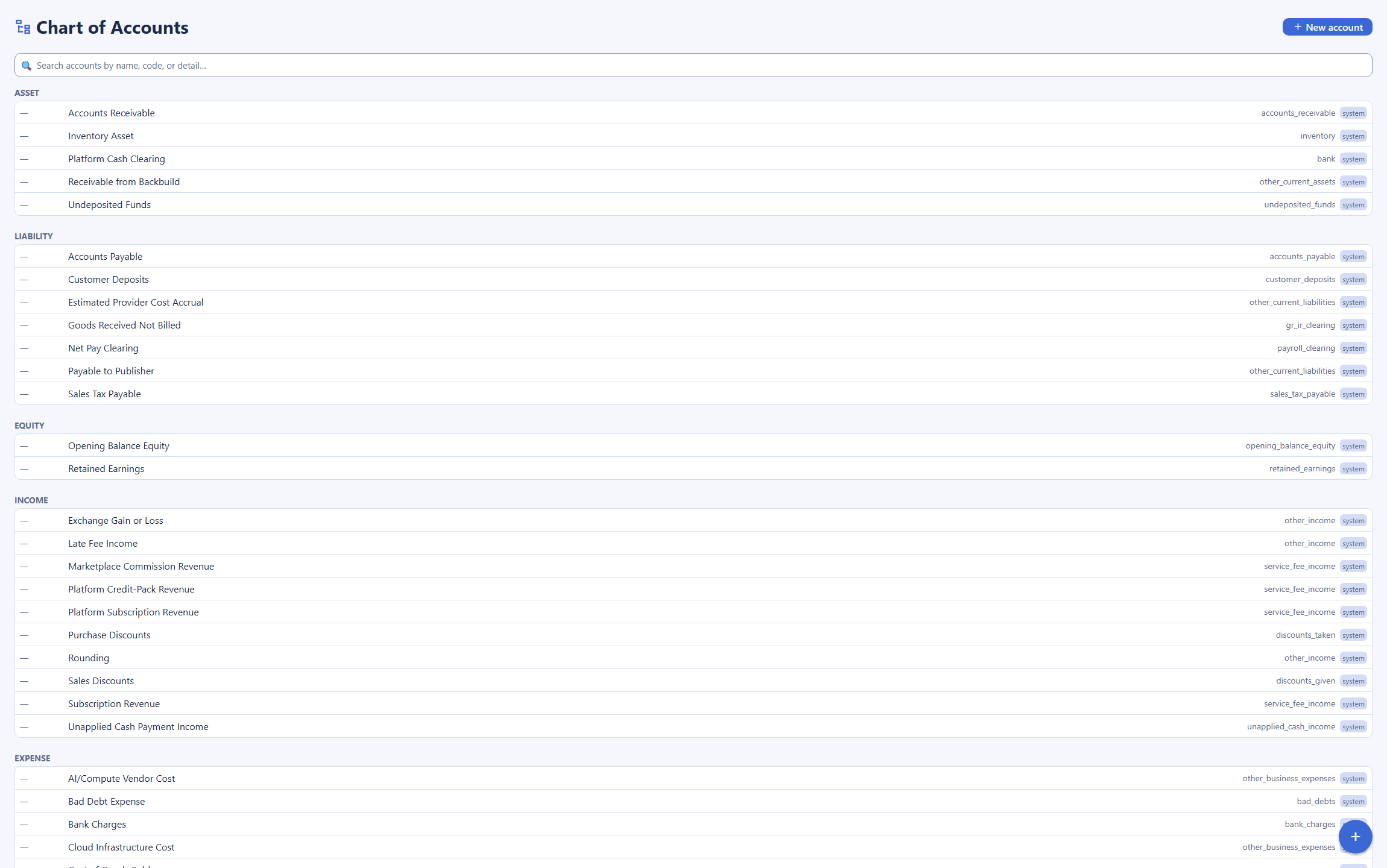
Freelancers and solopreneurs
For a freelancer who mostly needs to invoice, track expenses and time, and see a simple profit picture, both tools do the core job well. FreshBooks is the more polished experience here, with a clean invoice, a client portal, and online payment on every plan, and its mobile app is mature for capturing a receipt on the go. Its friction is cost and caps: Lite is $23 a month and stops at five billable clients. Backbuild Finances covers a freelancer's core free: real books, invoices, estimates, expense and time tracking, and statements with no client cap, inside the workspace you already use to write and email clients, though it does not offer a client portal or native payment through the invoice today.
Service businesses and agencies with client projects
For an agency or a service firm running client projects, retainers, and team time tracking, FreshBooks is squarely in its home territory: projects and time tracking on every plan, plus proposals with e-signature and client retainers on Plus and above, with a client portal for approvals. Backbuild matches the projects, job costing, and time tracking, and it adds deeper books, budgets, and consolidated reporting, but it does not offer proposals with e-signature, retainers, or a client portal today. The team-cost math also differs: FreshBooks adds $11 a month per member, where Backbuild's per-seat price buys the whole workspace.
Contractors and field-service businesses
For a contractor or a field-service business invoicing from a job site, tracking mileage, and snapping receipts, mobility matters. FreshBooks is ahead here today: its mature mobile apps invoice, capture receipts, and track mileage on the go. Backbuild tracks mileage and captures receipts too, and it records the job costing behind the invoice, but its native mobile app is still coming soon, so mobile-first fieldwork is smoother on FreshBooks right now.
Businesses outgrowing FreshBooks on accounting
A common reason to leave FreshBooks is the accounting ceiling: it has no inventory management, thinner reporting, and no multi-entity consolidation, so product businesses and growing companies eventually need more. This is where Backbuild Finances is genuinely deeper: inventory and cost of goods, fixed assets and depreciation, loans, budgets, classes, and consolidated reports are on every plan, and double-entry accounting is free rather than gated to a $43 tier. For a business that has outgrown invoicing-first software but does not want a heavy, expensive accounting suite, Backbuild covers the deeper ledger at no separate cost.
Teams who want their books without another subscription
For a team already choosing an all-in-one workspace, the cost model matters. Backbuild Finances is part of the workspace on every plan, so a document, an email, an invoice, and the ledger are one product, and the accounting is not a separate subscription with its own client caps and per-member fees. The whole of the books is also drivable over a public REST API with HMAC-signed webhooks, so a script or an AI agent working through governed tools can raise invoices, pull reports, and react to events. FreshBooks is a strong, polished invoicing product, but it is a standalone one, priced and capped on its own.
How the two products compare for each part of the decision
The economics of the two products
The clearest difference is the cost model. FreshBooks sells invoicing and accounting as its own subscription, priced by plan with Lite at $23 a month capped at five billable clients, Plus at $43 adding double-entry accounting and reports, and Premium at $70 for unlimited clients, plus $11 a month for each extra team member and managed payroll only through a separate Gusto add-on. The practical effect is that the bill climbs as you add clients, add people, or reach for accounting reports.
Backbuild Finances is not a separate line item at all: the books are part of the workspace on every plan, including Free, with no billable-client cap, and the paid tiers that add unlimited invoicing, sales-tax tracking, and Stripe start at $19 a seat a month. For a business that bills many clients, or one weighing the total of an invoicing subscription plus the other tools it runs, the consolidation and the absence of caps are the saving. The counterweight is that FreshBooks bundles native online payments and a client portal into that price, which Backbuild does not offer today.
Bottom line: for a business that bills more than a few clients or wants to consolidate tools, Backbuild is materially cheaper because the books are bundled, uncapped, and free on every plan. FreshBooks earns its price when the polished invoicing, the client portal, and native payments are what you are buying.
Data governance and access control
For anyone responsible for who can see and change the books, the two products take different shapes. Backbuild scopes financial data to your organization and isolates it from every other organization on the platform, and access is governed by the same per-organization roles and permissions as the rest of the workspace. Every write is recorded in an append-only audit trail, single sign-on with a tamper-evident log is on every plan, and sensitive identifiers such as a tax ID sit in an encrypted vault revealed only to those you authorize. The AI assistant reaches the books through governed tools rather than raw database access, and it can run on your own AI provider or model, which keeps the controls and the data path in your hands.
FreshBooks handles this in its own way: it offers team member roles and per-account data separation, but single sign-on is not a standard-plan feature the way Backbuild ships it, and there is no encrypted vault for sensitive identifiers. Against that, FreshBooks brings something Backbuild cannot yet claim: it is a mature, widely used product with a long operating record, which is itself a form of assurance for a cautious evaluator.
Bottom line: Backbuild offers finer-grained org-scoped controls, an encrypted vault, and single sign-on on every plan, where FreshBooks centers on team roles. FreshBooks counters with the reassurance of a long, established operating history.
Working with an accountant or bookkeeper
The ledger under Backbuild is a real double-entry system, and FreshBooks provides double-entry accounting on its Plus plan and above, so a professional can keep proper books in either. What differs is the surrounding ecosystem. FreshBooks runs an Accounting Partner Program with a certification path, and it is a product many bookkeepers already recognize. That familiarity is a genuine advantage: a practice can pick up a FreshBooks file without training.
Backbuild gives a bookkeeper the same double-entry ledger with role-based access and an audit trail, and the whole of the books is drivable over a public REST API with webhooks for firms that build their own tooling. What it does not have is the established install base, the certified-advisor program, or managed payroll and sales-tax filing, and those are real reasons a firm standardized on FreshBooks would hesitate to switch.
Bottom line: if your accountant lives in FreshBooks and relies on its program, that is a strong reason to stay. If you keep the books yourself, or your advisor is willing to work in a modern ledger with an API, Backbuild is a capable, lower-cost home with deeper accounting.
A business owner keeping the books day to day
For an owner doing the books themselves, the daily experience turns on how much accounting knowledge the tool assumes. FreshBooks is widely praised for being easy and intuitive for non-accountants, which is a real strength for someone who just wants to invoice and get paid. Backbuild pairs a more rigorous ledger with an AI assistant that reads a receipt or a bank statement and drafts the entries, and because nothing posts until the owner approves it, the guidance never becomes an unreviewed automation. Budgets, classes, and time and job costing are included, so an owner can plan and segment without an upgrade.
Where FreshBooks pulls ahead for this reader is the getting-paid experience an owner does not want to assemble: native online payment through the invoice and a client portal on every plan. Those remove work an owner would otherwise carry, and Backbuild does not offer them fully today.
Bottom line: FreshBooks suits an owner who wants the smoothest path from invoice to payment. Backbuild suits an owner who wants guided, deeper, low-cost books inside one workspace.
Building on the accounting API
For a developer wiring accounting into other systems, both products expose real programmatic surfaces. FreshBooks has a public REST API with OAuth and webhooks and a catalog of app integrations, so if you want a connector that already exists, it may be there.
Backbuild answers with a full public REST API that drives the whole of the books, the same way it drives the rest of the platform, plus HMAC-signed outbound webhooks with a delivery log and zero-downtime secret rotation. The honest limit to state is on the AI side: Backbuild has no dedicated finance tool namespace on its Model Context Protocol surface today, so an AI agent operates the books through the general MCP surface and the REST API rather than a finance-specific tool set. For custom integrations and agent-driven bookkeeping under governed tools, the API and webhooks are there; for reaching an existing catalog of third-party apps, FreshBooks has the larger prebuilt ecosystem.
Bottom line: both give builders a real API and webhooks. FreshBooks wins on the breadth of its prebuilt integrations; Backbuild wins when you want one API and one governance model across accounting and the rest of the workspace.
Strategic fit and vendor risk
Read at the level of a longer-term commitment, the two products present opposite risk profiles. FreshBooks is a proven product: large adoption across more than 160 countries with a polished invoicing experience, and its risk is mostly cost and ceiling, the climbing prices and per-member fees and the accounting gaps a growing business runs into. Backbuild is the newer entrant: it consolidates deeper books into one governed workspace at no separate cost, with a public API, webhooks, and per-organization controls, and its risk is the mirror image, a shorter track record and gaps in a client portal, proposals, native payments, automated feeds, and native mobile apps that it lists on its roadmap.
Bottom line: FreshBooks is the lower-risk choice for a business that wants a polished, established invoicing product today, with a client portal and native payments, and will pay for it. Backbuild is the stronger strategic fit for a team consolidating tools that values one workspace, deeper books, an API, and a lower cost base, and can accept a newer product with a stated roadmap.
Frequently asked questions
Is there a free alternative to FreshBooks?
Yes. Backbuild Finances is part of the Backbuild workspace on every plan, including the Free plan, so your daily books and invoicing cost nothing on their own. The Free plan includes real double-entry accounting, estimates and purchase orders, bills and expenses, inventory, bank reconciliation, budgets, time and mileage tracking, and job costing, plus up to five invoices a month; unlimited invoicing, sales-tax tracking, and connecting Stripe to record payments come with the paid workspace tiers. FreshBooks has no free plan: its Lite plan is 23 dollars a month and caps you at five billable clients, and unlimited billable clients start on Premium at 70 dollars. If your goal is real books and invoicing without a separate subscription, Backbuild is a strong fit. If your goal is a client account portal, proposals with e-signature, native online payments on every plan, or a mature mobile app, FreshBooks leads and Backbuild does not match all of it today.
Is Backbuild Finances a cheaper alternative to FreshBooks?
For the books and invoicing themselves, yes, because they are included in the workspace rather than sold as their own subscription. FreshBooks lists Lite at 23 dollars a month, Plus at 43, and Premium at 70, and it adds 11 dollars a month for each extra team member on top of the plan. Backbuild Finances is part of the Free plan and the paid workspace tiers, which start at 19 dollars a seat a month, so the accounting is not a separate line item. The trade runs the other way in one respect: FreshBooks includes native online payments and a client portal on every plan, where Backbuild records payments on paid tiers and does not offer a portal today, so a business that lives on getting paid through the invoice may value what FreshBooks bundles.
What is the FreshBooks client limit, and does Backbuild have one?
FreshBooks caps billable clients by plan: five on Lite, fifty on Plus, and unlimited only on Premium at 70 dollars a month, which is one of the most common reasons people look for an alternative. Backbuild Finances has no billable-client limit on any plan, so the number of customers you invoice does not force an upgrade. If you regularly bill more than a handful of clients and resent paying up a tier for the privilege, that difference is a real reason to weigh Backbuild.
Does Backbuild do real double-entry accounting like FreshBooks?
Yes, and it does so on every plan, where FreshBooks gates double-entry accounting and its accounting reports to Plus at 43 dollars a month. Backbuild Finances is a genuine double-entry system: a chart of accounts, a general ledger that every transaction posts to, and journal entries you can write and reverse. Invoices, bills, and payments each post a balanced entry, so debits and credits always agree and your profit-and-loss, balance sheet, and trial balance reconcile to the ledger. It goes further than FreshBooks in several places a growing business reaches for: inventory and cost of goods, fixed assets and depreciation, loans, budgets, classes, and consolidated reports, none of which FreshBooks offers.
Can Backbuild send estimates and invoices like FreshBooks?
Yes. Backbuild Finances raises professional invoices and recurring invoices, and it raises estimates and quotes that convert into an invoice when the customer approves, including progress invoicing that bills a job in stages. Where FreshBooks is ahead is the polish and the getting-paid experience around the invoice: a mature, widely praised invoice design, a client account portal where customers view and pay, and native online payments on every plan. Backbuild sends and tracks the documents and records the payment on paid tiers, and a customer-facing pay-by-link is on the roadmap.
Does Backbuild have a client portal and proposals like FreshBooks?
Not today, and these are genuine FreshBooks strengths. FreshBooks includes a Client Account Portal on every plan, where a client views estimates and invoices, approves them, pays, and asks questions, and it offers proposals with e-signature and client retainers on its Plus plan and above. Backbuild Finances does not have a client-facing portal, proposals with e-signature, or retainers today. If a self-service client experience is central to how you work, FreshBooks is the stronger choice; if you mainly need to raise and track the documents yourself inside a wider workspace, Backbuild covers that.
Can Backbuild connect to my bank and take online payments like FreshBooks?
Partly, and this is a fair place to concede. FreshBooks has automated bank feeds through Plaid across thousands of banks and native online payments on every plan powered by Stripe, so a client can pay an invoice directly and transactions flow in automatically. Backbuild Finances imports bank transactions today and auto-categorizes them with bank rules, and full bank reconciliation is shipped, but broad automated live feeds are still rolling out. It records payments on paid tiers by connecting Stripe, and a customer-facing pay-by-link on the invoice is on the roadmap. For hands-off bank sync and paying through the invoice from day one, FreshBooks is ahead.
Can my accountant or bookkeeper use Backbuild Finances?
They can work in it through per-organization roles, so you can give a bookkeeper the access they need and keep an audit trail of what changed, and the whole of the books is drivable over a public REST API for firms that build their own tooling. The difference is ecosystem, not the ledger: FreshBooks runs an Accounting Partner Program and is a product many bookkeepers already know, and Backbuild is a newer product without that established network. If your accountant insists on the tool they already use every day, that is a real reason to weigh FreshBooks.
What can Backbuild Finances do that FreshBooks cannot?
Several things stand out. First, the books are free and included, with no billable-client cap and no per-team-member add-on fee, where FreshBooks charges a subscription, caps clients by plan, and adds 11 dollars a month per extra member. Second, the accounting is deeper in the places a growing business outgrows FreshBooks on: real inventory and cost of goods, fixed assets and depreciation, loans, budgets, classes, and consolidated reports, none of which FreshBooks offers. Third, the accounting lives inside an all-in-one workspace that spans Mail, Chat, Meetings, Calendar, Contacts, Docs, Sheets, Slides, Diagrams, Photos, the photo, video, training-video, audio, and music editors, Files, the help desk, and an encrypted secrets vault, with single sign-on, per-organization roles, and a tamper-evident audit log on every plan, a full public REST API, and AI that drafts entries from a receipt but never posts without your review and can run on your own AI provider or model. FreshBooks is the more polished invoicing product, with a client portal, proposals, native payments, mature mobile apps, and a large user base; Backbuild is the better fit for real, deeper books inside a wider workspace at no separate cost.
Try Backbuild Finances free
Keep real double-entry books, invoicing, estimates, purchase orders, inventory, bank reconciliation, budgets, job costing, and financial statements inside an all-in-one workspace, free on every plan with no billable-client cap, a public REST API, HMAC-signed webhooks, and an AI assistant that drafts entries from a receipt and never posts without your review. If your first requirement is a client account portal, proposals with e-signature, native online payments through the invoice, or a mature mobile app, FreshBooks is the stronger choice today.
Get started free